Most of the UK’s upland hay meadows have disappeared since the late 1940’s. The Tweed Meadow Project, run by Merlindale Nature, seeks to reverse this loss.
Around 7 BOG members agreed to participate in this project, and the each took sacks of seed to spread on their chosen plots.
Prue Pullen, one of the participants writes to tell us:
Earlier in the year, we had asked Fergus Hitchcock, a neighbouring first generation farmer working in partnership with Clive Ashby of Newhall Farm, to harrow our field with the help of his students from Borders College. Then we were able to spread the wild flower seeds from Merlindale. The results have been both a delight for us and useful for the farm.
We’ve been waiting for a dry spell to cut our hay meadow and Fergus arrived this evening for our harvest.
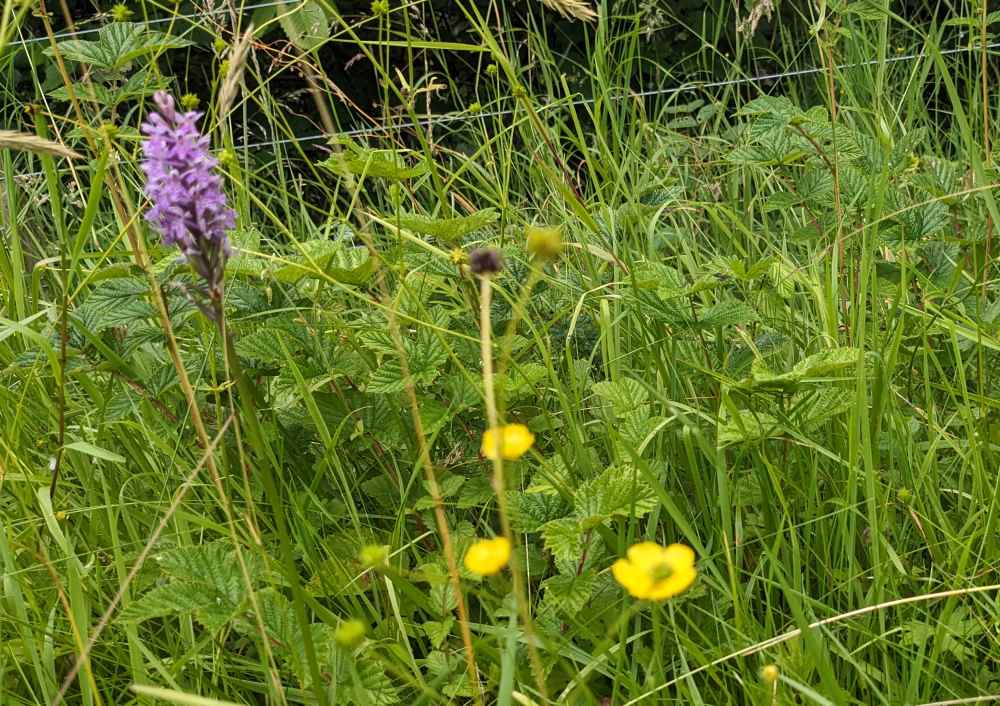
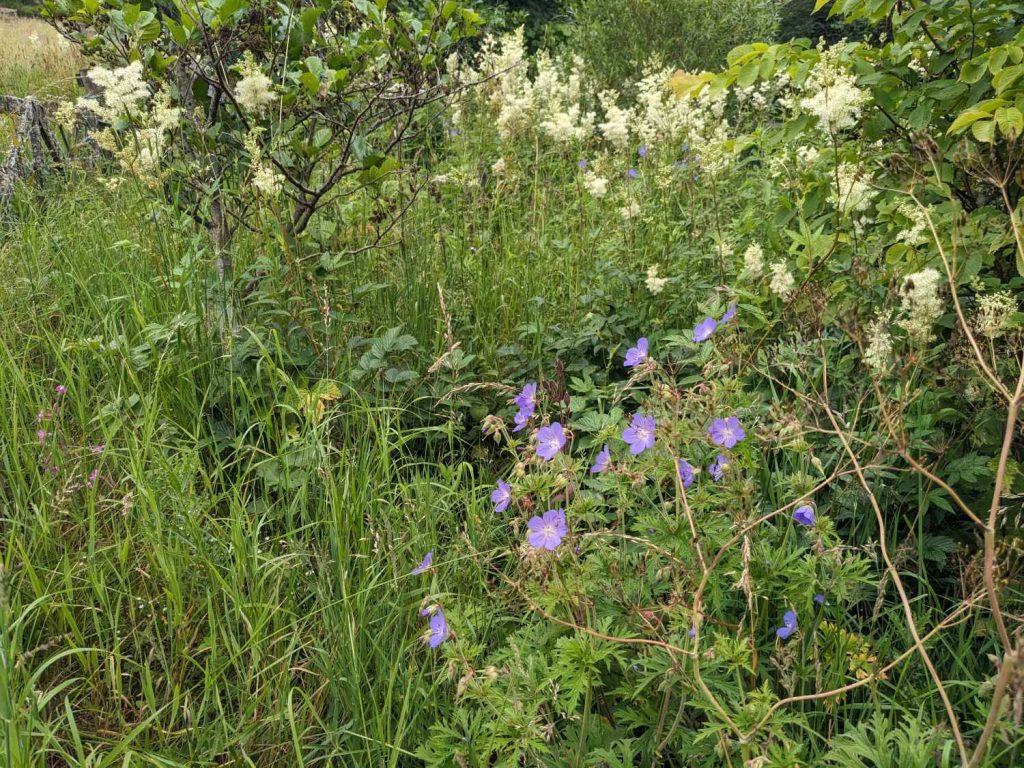
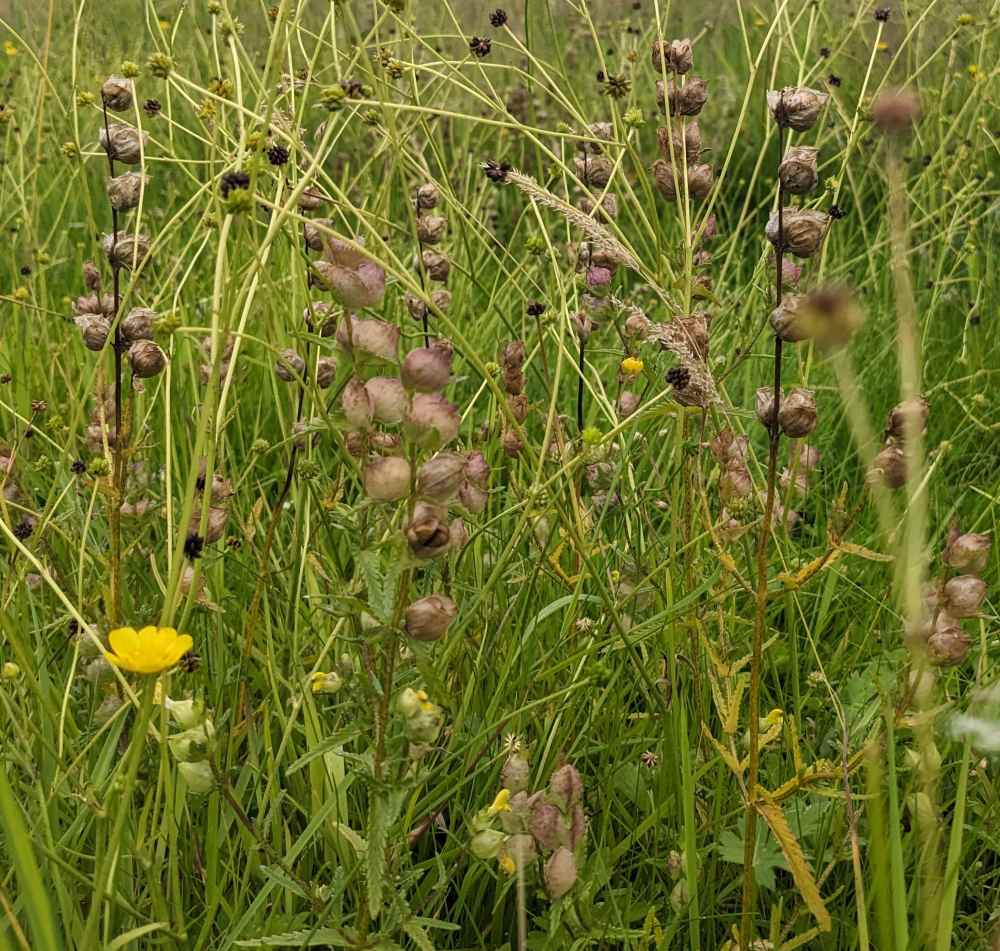
We’ve had an encouraging start to our Tweed Meadows project this summer with a fair showing of yellow rattle, cranesbill, vetch and even a few orchids.
Weeds have not really been a problem. We’ve had some dominating ones like the hogweed and we did try and pick the seed heads. We picked 2 large bagful’s and gave up after that!
Fergus is mowing, baling and removing the hay right now.
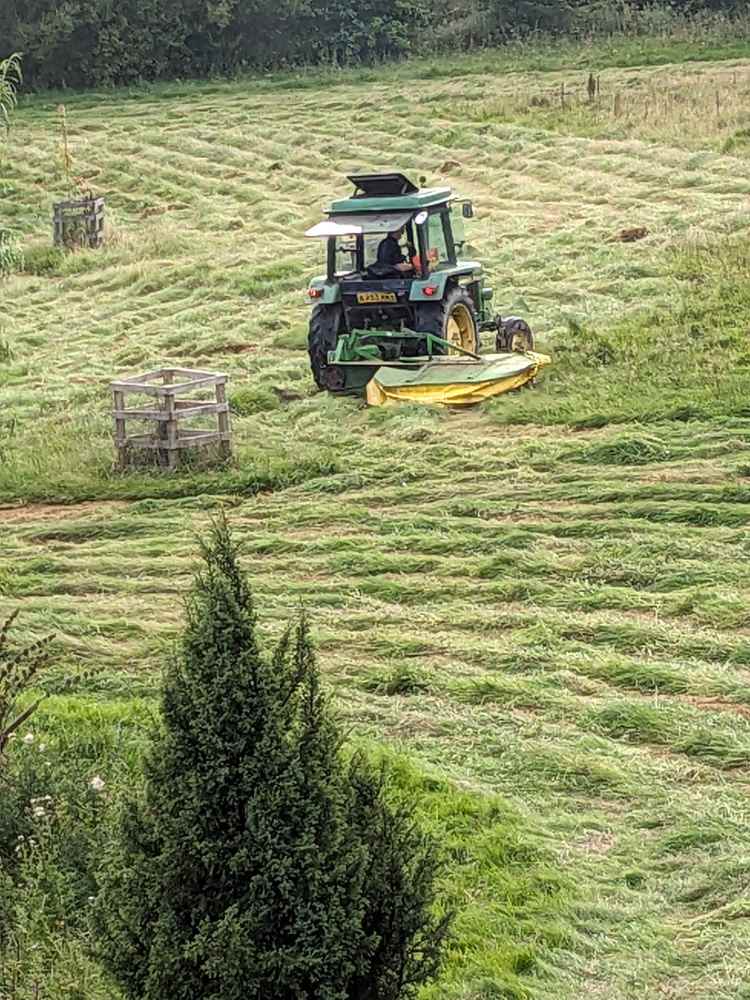
Fergus told us: as we get into September it is our last chance at a hay crop which we plan to feed to cattle and sheep through the winter – if the weather changes we have the option to wrap as haylage but we try and avoid it. We find the array of different grasses and flowers found in these meadows provides a varied diet for the animals with plenty roughage. We tend to feed it alongside more energy rich silage and haylage made earlier in the year.
Then he will put sheep out on the field over the winter to help tread in the wild flower seed. It should be even better next year!