Lesley Blackthorn writes:
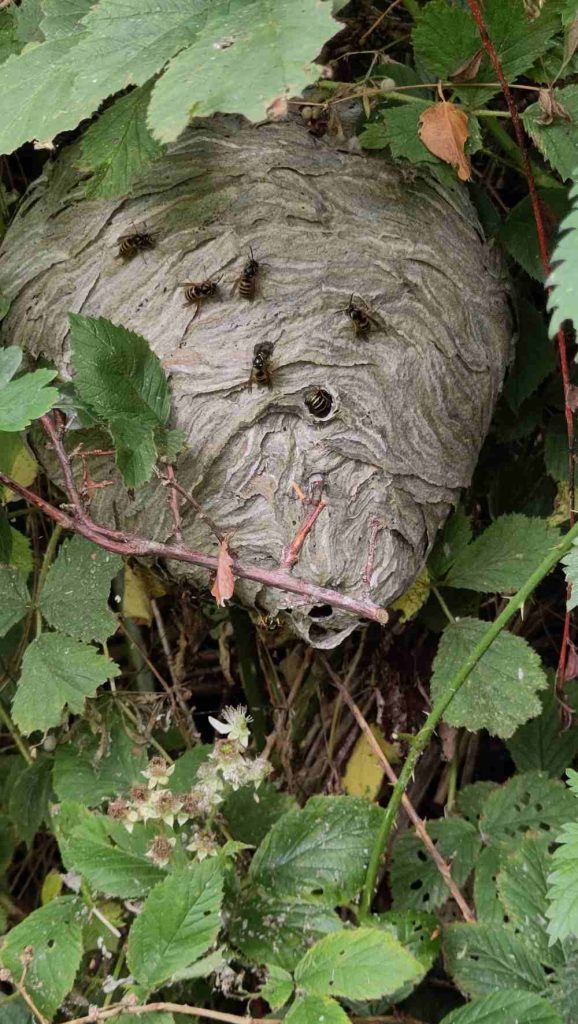
A couple of months ago I found a beautiful little wasp nest in the brambles at the bottom of our garden. It has now grown to the size of a football and must be housing thousands of our stripy garden helpers.
Like bees, wasps are pollinators, but they are also keen predators and control plant pests like caterpillars and aphids. The wasps feed the larvae in the nest with their prey and in return are sustained with sugary secretions from the larvae. At the end of the summer, once the larvae have matured, the worker wasps are no longer needed. They then become a familiar pest while searching for sugar.
Like much of the wildlife in our gardens, wasps can also be a nuisance when they want to share our crops. Plums are more vulnerable, when split or damaged. Check them frequently and get there before the wasps do. But given the good that wasps do in our gardens, maybe sharing some of our fruit is a small price to pay.
There have been concerns expressed this year that wasp numbers have been in serious decline. So try to avoid destroying wasp nests, as these insects are important for maintaining good garden health.
Wasps can give a nasty sting and, if they think you are disturbing their nest, can attack in force. Applying a cold compress to a sting is usually very effective. However, if you receive a large number of stings or have an allergic reaction, do seek medical advice.